
The average internet bill in the U.S. works out to about $58 a month across all households, according to the Bureau of Labor Statistics’ 2024 spending survey. But that number includes the homes that pay nothing. For households that actually pay for home internet, my math puts it closer to $75 a month, or about $77 at 2026 prices.
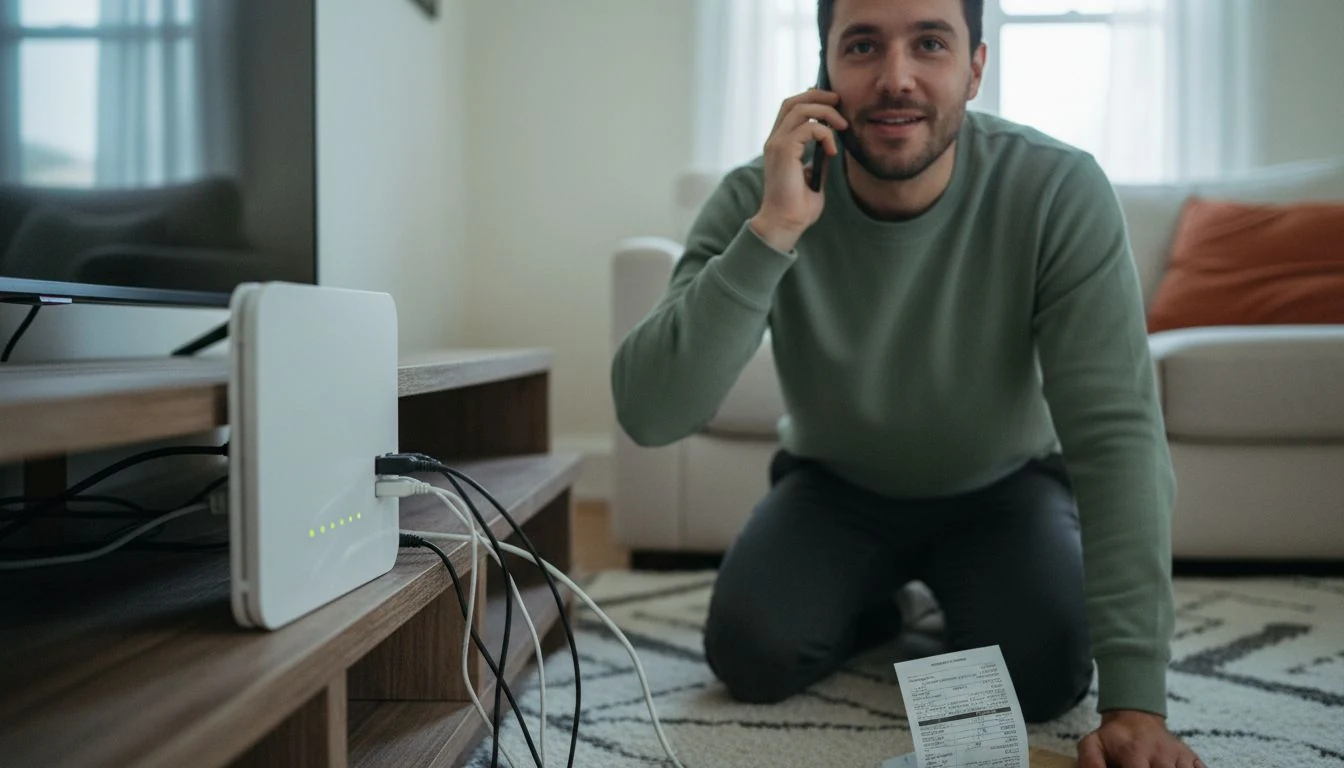
I paid $50 a month for my first year of home internet and felt pretty smug about it. Then month thirteen arrived at $82, and I paid it for another eight months before I noticed. I never got a letter about a price change. The promotion ran out and the bill quietly caught up. Below you’ll find the benchmark from real government data, what actually sits inside that monthly number, what speed you probably need, and the fifteen-minute call that got my bill back down.
What the average internet bill really is in 2026
The cleanest national figure comes from the BLS Consumer Expenditure Survey, which asks thousands of households what they actually spent. In its 2024 detailed expenditure tables, the line called “computer information services (internet)” averaged $697.90 a year per household.
- Average across all U.S. households: $697.90 a year, or about $58.16 a month
- Share of households reporting an internet expense in a given quarter: 77.5%
- My estimate for households that pay: $697.90 divided by 0.775, about $900 a year or $75 a month
That last line is my arithmetic, not an official BLS figure. It’s a rough way to strip out homes with no bill (people on phone data only, roommates whose name isn’t on the account, homes where it’s bundled into rent). I think it’s the more honest benchmark for anyone holding an actual bill.
Prices haven’t stood still since 2024, but they haven’t jumped either. More on that in a second.
I remembered the $50. I forgot the date it stopped being $50.
Why the typical internet bill barely moved while everything else did
The BLS tracks internet prices in the Consumer Price Index under a series called internet services and electronic information providers. The index was 86.249 in August 2025 and 87.518 in August 2026. That’s a rise of about 1.5% in a year.
The part I didn’t expect: the index is set to 100 in December 1997, and it’s still below 100 today. Part of that comes from how the BLS adjusts for quality, so a faster connection for the same money reads as a lower price. Read it as more speed per dollar since 1997, since your actual bill almost certainly went up.
For budgeting, I compared the 2026 average so far (January through August) to the 2024 average. It’s up about 2%. Applied to the survey numbers, that puts the typical internet bill at roughly $59 a month across all households and about $77 for households that pay. Again, my estimate.
If your bill went from $50 to $80, nationwide price changes explain about a dollar of that. Look at your account for the rest.
What’s actually inside your internet bill per month
When I finally read mine line by line, the $82 wasn’t one price. It was four things wearing a trench coat:
- The plan price. Mine had quietly gone from a $50 promo rate to a $67 standard rate.
- Equipment rental. $15 a month for a modem-router combo I’d never thought about.
- A speed tier I didn’t need. I was on the fastest plan they offered, chosen on a day I was nervous about video calls.
- Taxes and fees. A few dollars, and the only part I truly couldn’t touch.
Some bills also carry a data cap with overage charges, or a monthly fee for skipping autopay or paper billing. Look for those too.
That same “four things in one total” pattern shows up on phone bills. I wrote about untangling mine in what the average phone bill actually looks like, and the internet version is easier, because fewer lines are fixed.
How much speed you need (and why most of us buy too much)
This was my biggest leak. The FCC’s Household Broadband Guide sorts homes into light, moderate, and high use by how many people and devices are online at once:
- Basic service, 3 to 8 Mbps: one or two people doing email, browsing, and basic video
- Medium service, 12 to 25 Mbps: a couple streaming HD, or a few people doing light stuff at once
- Advanced service, more than 25 Mbps: three or four people streaming, gaming, or on video calls at the same time
The FCC calls these rough guidelines, and they were last reviewed in 2022, so I’d treat them as a floor and give yourself room. Still. My household at the time was me, a laptop, one TV, and a lot of video calls. I was paying for a gigabit. I dropped to a 300 Mbps plan and never once noticed the difference, except on the bill.
If you have four people gaming and working from home, a faster plan may be worth every dollar. I’d pick it on purpose, though, after counting devices, and not on a nervous day like I did.
How to lower your average internet bill in one phone call
The order I use now takes about fifteen minutes plus hold music.
- Pull your last itemized bill. Write down the plan name, the speed, the equipment fee, and the date your promotion started.
- Check what new customers pay. Look up your provider’s current plans for your address. By FCC rule, providers have to show a broadband label at the point of sale with the monthly price, how long any intro rate lasts, and the typical speed.
- Check who else serves your address. Even one competitor’s label gives you a real number to mention.
- Call and ask for retention or loyalty offers, not “can you lower my bill.” Give your target number and the competitor price.
- Drop the speed tier if you’re paying for more than your household uses.
- Ask about the equipment. Many providers let you use your own compatible modem and router. Buying one can pay for itself in about a year at $15 a month in rental.
- Write the new price and the new promo end date in your calendar. Set a reminder for two weeks before it expires.
My call: the agent offered a new 12-month rate of $45 on the 300 Mbps plan. I returned the rented router and bought my own. The bill went from $82 to about $50 with taxes. That’s $32 a month, or $384 a year, for one call and one trip to drop off a box.
Step seven is the one I skipped the first time, and it’s why I overpaid for eight months. Now the promo end date lives in my monthly bill tracker right next to the amount.
Help with your internet bill if money is tight
If your internet bill is squeezing out groceries, there’s real help, and using it is nothing to feel weird about.
The FCC’s Lifeline program takes up to $9.25 a month off phone, internet, or bundled service (up to $34.25 on qualifying Tribal lands). You can qualify with household income at or below 135% of the federal poverty guidelines, or if someone in your home gets SNAP, Medicaid, SSI, federal public housing assistance, or a Veterans Pension. One Lifeline benefit per household.
You might remember the bigger Affordable Connectivity Program discount. That one ended on June 1, 2024, when its funding ran out, so if you see an older article promising $30 off, it’s out of date.
Many providers also run their own low-income plans. Ask for them by name on the call: “Do you have a low-income or affordable plan I qualify for?”
Cozy tip: Tonight, find your internet bill and write down one date: when your current price ends. That’s the whole task. If you want a home for it, the free printable budget template has a spot next to every bill for the promo end date, and future you will be very glad it’s there.
How the average internet bill fits your whole budget
Internet rarely lives alone. In the same BLS survey, households spent another $1,359.39 on cell phone service, $454.09 on cable and satellite TV, and $185.02 on streaming and video rentals in 2024. Put those next to home internet and the “connected home” costs the average household about $233 a month.
That’s why I look at these as one bundle when I trim. Cutting cable while keeping four streaming apps you never open doesn’t save much. My subscription cleanup found more money than my internet call did.
If you’re setting up a first budget and don’t have a bill yet, I’d plug in $75 a month for internet, then correct it after your first real statement. And if you want to see where internet sits against rent, electricity, and water, my breakdown of the average utility bill covers the rest of the house, and my budgeting statistics roundup shows how the average paycheck actually gets split.
The connected-home lines in the average budget
Every line from the 2024 survey sits in one place below, so you can hold your own bills up against it. The annual column is BLS data. The monthly column divides by 12.
| Line in the BLS survey (2024) | Average per household, per year | Per month |
|---|---|---|
| Home internet (“computer information services”) | $697.90 | $58.16 |
| Home internet, households that pay (my estimate, 77.5% reporting) | ~$900 | ~$75 |
| Cellular phone service | $1,359.39 | $113.28 |
| Residential landline, including VoIP | $100.29 | $8.36 |
| Cable and satellite TV | $454.09 | $37.84 |
| Streaming, downloading, and renting video | $185.02 | $15.42 |
| All connected-home lines combined (all households) | $2,796.69 | $233.06 |
Common mistakes when comparing to the average internet bill
- Comparing your bill to the $58 figure. That average includes homes paying nothing, so it makes a normal bill look high. The $75 to $77 range is the fairer comparison for a paying household.
- Forgetting the promo end date. The jump usually lands 12 or 24 months in, with no new charge on the bill to warn you, just a bigger total.
- Buying speed for the worst day. Most homes pick a tier for the one time a video call froze, then pay for it every month.
More ways to shrink the fixed stuff live in my saving money posts.
Frequently Asked Questions
What is the average internet bill per month?
The BLS 2024 Consumer Expenditure Survey puts home internet at $697.90 a year per household, about $58 a month, but that includes households with no bill. Among households that pay, a reasonable estimate is about $75 a month, or around $77 at 2026 prices.
Is $100 a month too much for internet?
It’s above the typical paying household, but not unusual for very fast plans, rural service, or a bill with equipment rental and fees stacked on. Check your speed tier, your equipment fee, and whether a promotional rate recently ended before assuming you’re stuck with it.
What is the average WiFi bill?
WiFi is the wireless signal inside your home, and it runs on your home internet plan, so the average WiFi bill is the same as the average internet bill: roughly $58 a month across all households and about $75 for households that pay. A rented router can add a monthly equipment fee on top.
Why did my internet bill go up?
The most common reason is an expired promotional rate, often at 12 or 24 months. Other causes are a new equipment fee, a lost autopay discount, or data overage charges. Nationally, the BLS internet price index rose only about 1.5% from August 2025 to August 2026, so a big jump usually comes from your account, not the market.
How can I get cheaper internet if I’m low income?
The FCC’s Lifeline program offers up to $9.25 a month off internet or phone service if your household income is at or below 135% of federal poverty guidelines or you get benefits like SNAP or Medicaid. Many providers also have their own affordable plans, so ask for them directly.
Grab my free Monthly Budget Template
The same cozy spreadsheet I use to track every dollar — sinking funds, bills, and savings, all in one place. Join the newsletter and I’ll send it straight to your inbox.
No spam, ever. Unsubscribe anytime. — Nora
Keep reading — more on Saving Money