
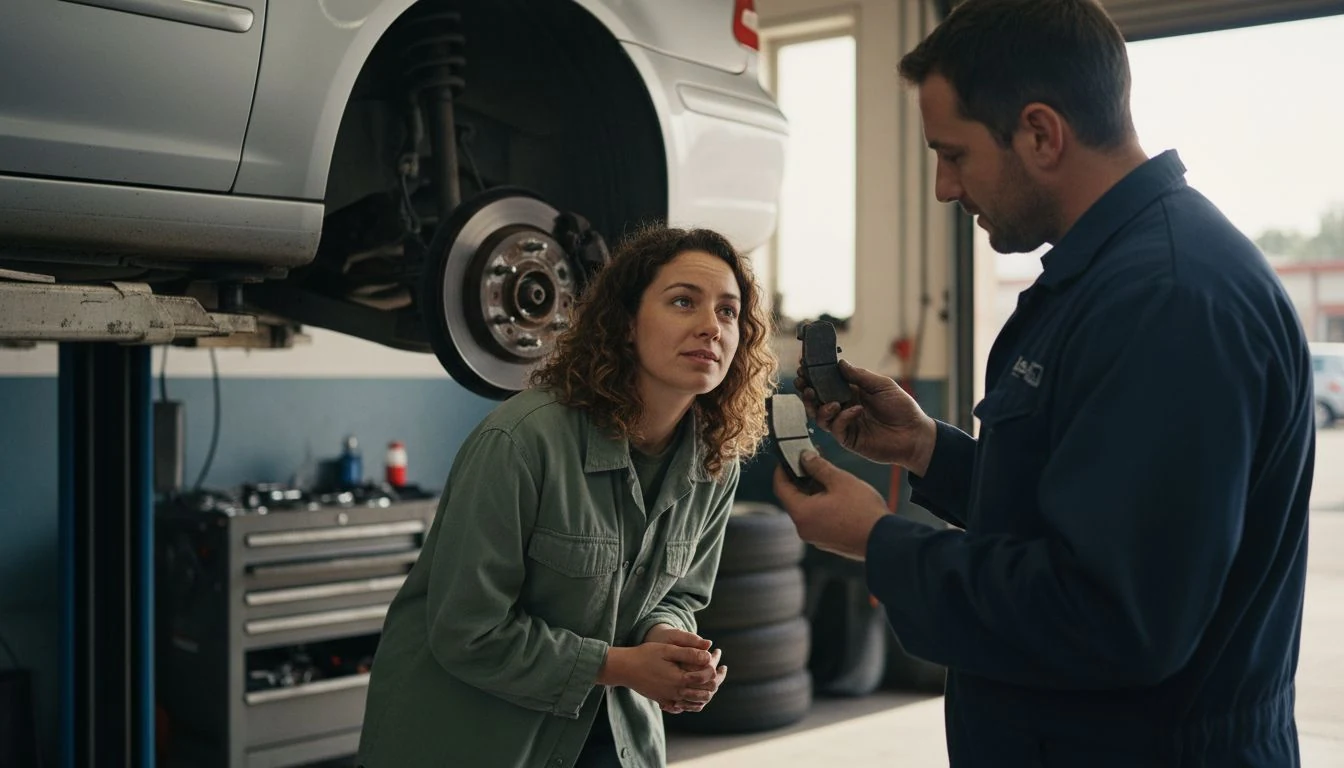
The average car maintenance cost per year is about $1,755 for a new car driven 15,000 miles, according to AAA’s 2026 driving costs study. That works out to roughly $146 a month, which is more than most of us put aside for “the car” until something breaks.
I learned that the expensive way. My first car repair fund got $40 a month because that number felt reasonable. Then I needed new tires, the fund had $160 in it, and the tires were $420. Below is where the real number comes from, why your car might cost more or less, and the monthly set-aside I’d use if I were starting over today.
The average car maintenance cost per year, in plain numbers
AAA has published its Your Driving Costs study every year since 1950. The 2026 edition puts maintenance, repairs, and tires at 11.7 cents per mile. That’s averaged over five years and 75,000 miles across 34 popular new models.
The yearly bill depends mostly on how much you drive:
- 10,000 miles a year comes to about $1,170, or $97.50 a month.
- 15,000 miles a year (AAA’s standard) comes to about $1,755, or $146 a month.
- 20,000 miles a year comes to about $2,340, or $195 a month.
Last year’s study had the same category at 11.04 cents per mile. At 15,000 miles that’s $1,656 a year, so the 2026 figure is up about $99, or 6%.
One thing to know before you plug this into your budget. AAA’s number includes the cost of a comprehensive extended warranty and covers only the first five years of a brand-new car. If you drive something older and paid off, like I do, the warranty piece doesn’t apply to you. The repairs piece probably applies more, and that’s the trade you make for having no loan.
My rough way of thinking about it: years one to three are mostly oil, filters, and rotations. Somewhere around years four to six, the first set of tires and brake pads shows up. After that, it’s batteries, belts, suspension parts, and the odd sensor that lights up the dashboard on a Sunday night. None of it is shocking once you expect it.
What the average car maintenance cost per year actually covers
AAA lumps three kinds of spending into one line. I pull them apart, because they hit my bank account on very different schedules.
Routine maintenance is the boring, predictable stuff your owner’s manual lists: oil changes, filters, tire rotations, wiper blades, fluid top-ups. Small amounts, a few times a year. My last oil change and rotation together came to $89.
Wear-and-tear repairs come later and cost more. Brake pads, a battery, belts, maybe a wheel bearing. You know they’re coming. You just don’t know which month.
Then tires. AAA builds in one replacement set over five years, and that’s often the single biggest maintenance bill a newer car will hand you. My $420 tire bill shouldn’t have surprised me. I hadn’t looked at my tread in a year.
The day I stopped calling car repairs “emergencies,” I started saving for them.
Why repair bills keep climbing, and why it’s mostly labor
If your last trip to the shop felt pricier than the one before, the government data agrees with you. The Bureau of Labor Statistics tracks a price index for motor vehicle maintenance and repair. Between August 2025 and August 2026 it rose 5.2%.
The detail that caught my eye: the index for vehicle parts and equipment rose only 0.9% over the same twelve months. The brake pads cost about what they did a year ago. What went up is the hour someone spends installing them, plus shop fees and diagnostic time on newer, more computerized cars.
That matters for your plan. Parts you can sometimes shop around for. Labor rates you mostly can’t, except by choosing where you go and keeping small problems from turning into big ones.
Gas, hybrid, or electric: who pays more to keep it running
AAA’s 2025 study broke maintenance out by vehicle type and powertrain at 15,000 miles a year. A few rows from that breakdown surprised me:
- A gas medium sedan came to $1,786 a year, the hybrid version $1,551, and the electric one $1,358.
- A gas compact SUV ran $1,746, versus $1,491 for the hybrid and $1,449 for the EV.
- Medium SUVs sat closer together: $1,769 gas, $1,679 hybrid, $1,632 electric.
- Pickups flipped the pattern. The electric truck ($1,685) cost more to maintain than the hybrid ($1,545).
An EV usually saves a few hundred dollars a year on upkeep. Not always, though, and I wouldn’t switch cars for that alone. Heavier vehicles chew through tires faster, and tires are a big slice of this budget line no matter what’s under the hood.
How to budget for the average car maintenance cost per year
This part changed my money life. I treat car upkeep as a monthly bill I pay to myself, in its own sinking fund. It’s one of the four funds I kept when I cut my list down to the ones I’d use.
- Find your real mileage. Check two oil-change receipts or your last two registration renewals and subtract. Mine came out to about 11,000 miles a year, way below the 15,000 I’d been guessing.
- Multiply by a cents-per-mile rate. AAA’s 11.7 cents is a decent starting point. For a car past its warranty or over 100,000 miles, I’d round up rather than down.
- Divide by 12 and automate it. Set a transfer for the day after payday so the money moves before you can spend it.
- Add anything with a known date. Registration, inspection, and the insurance renewal (I covered that bill in my post on the average car insurance cost per month) can ride in the same fund or a neighbor fund.
- Check the tires twice a year. A penny in the tread takes ten seconds. If replacement is less than a year away, bump the transfer for a few months.
- Let it build. Don’t raid the fund for things that aren’t the car. A healthy balance is the whole point.
For me that math landed at $110 a month. It covers routine stuff easily and has slowly built a cushion for the bigger repair I know is coming on an older car. When the battery died last winter, I paid for it from the fund and nothing else in my budget moved.
Ways to keep your maintenance costs closer to the low end
These habits kept my repair fund from getting drained. Boring, but they work.
- Follow the maintenance schedule in your owner’s manual, not the sticker the quick-lube shop puts on your windshield. Many newer cars go well past 3,000 miles between oil changes.
- Get a second quote for anything over a few hundred dollars. I did this once for a $680 brake job and paid $455 at an independent shop for the same parts.
- Know your warranty rights. The Federal Trade Commission says it’s illegal for a dealer to deny warranty coverage just because you had routine maintenance done somewhere else.
- Say yes to small fixes early. A $30 set of wipers or a $15 bulb costs little. Ignoring a squeal for six months is how $250 brakes turn into $600 rotors and pads.
And a soft no to the warranty calls and postcards. Those “final notice” messages about your car’s warranty are sales pitches, and the FTC has warned people about them for years.
Your car maintenance set-aside by miles driven
This is the table I wish I’d had when I set up my first fund. It uses AAA’s 2026 rate of 11.7 cents a mile, so treat it as a starting point for a newer car and add a buffer for an older one.
| Miles per year | Yearly maintenance estimate | Monthly set-aside | Per paycheck (biweekly) |
|---|---|---|---|
| 8,000 | $936 | $78 | $36 |
| 10,000 | $1,170 | $97.50 | $45 |
| 12,000 | $1,404 | $117 | $54 |
| 15,000 | $1,755 | $146.25 | $67.50 |
| 20,000 | $2,340 | $195 | $90 |
Common mistakes when budgeting for car maintenance
- Budgeting from a guess instead of a price. My $40 a month felt fine until I priced tires. Look up what your next big item really costs and work backward.
- Folding car repairs into the emergency fund. Repairs are predictable on average, so they deserve their own line. Your emergency fund should be for the truly unexpected, like a job loss.
- Forgetting the car payment ends but the car keeps aging. Once a loan is paid off, maintenance usually rises. That’s why I kept “paying” myself after my car payment ended.
Cozy tip: open a separate savings bucket today and name it after your car. Even $25 a week counts. If you want to see it next to your other monthly bills, grab my free budget printable and give the car its own line. I find it oddly calming to watch that balance grow. For more numbers like these, my roundup of budgeting statistics and the rest of the budgeting posts are a good next stop.
Frequently Asked Questions
What is the average car maintenance cost per year?
AAA’s 2026 study puts maintenance, repairs, and tires at 11.7 cents per mile for a new car. At 15,000 miles a year that’s about $1,755, or around $146 a month. Drive less and it drops; at 10,000 miles it’s roughly $1,170.
How much should I set aside each month for car repairs?
A simple rule is your yearly miles times 11.7 cents, divided by 12. For most drivers that lands between $80 and $150 a month. If your car is older or past its warranty, round up, because repairs tend to climb as a car ages.
Do older cars cost more to maintain?
Usually. AAA’s figure covers only the first five years of a new car, when many repairs fall under warranty. After that, wear items like brakes, suspension parts, and batteries come due, so a paid-off car often needs a bigger repair budget even though the loan is gone.
Is it cheaper to maintain an electric car?
Often, but not by a huge amount. In AAA’s 2025 breakdown, an electric medium sedan cost about $1,358 a year to maintain versus $1,786 for the gas version. For pickups the electric model cost more than the hybrid, mostly because heavy vehicles wear through tires faster.
Do I have to service my car at the dealer to keep the warranty?
No. The Federal Trade Commission says a dealer can’t deny warranty coverage because routine maintenance or repairs were done somewhere else. Keep your receipts so you can show the work was done on schedule.
Grab my free Monthly Budget Template
The same cozy spreadsheet I use to track every dollar — sinking funds, bills, and savings, all in one place. Join the newsletter and I’ll send it straight to your inbox.
No spam, ever. Unsubscribe anytime. — Nora
Keep reading — more on Budgeting Methods