
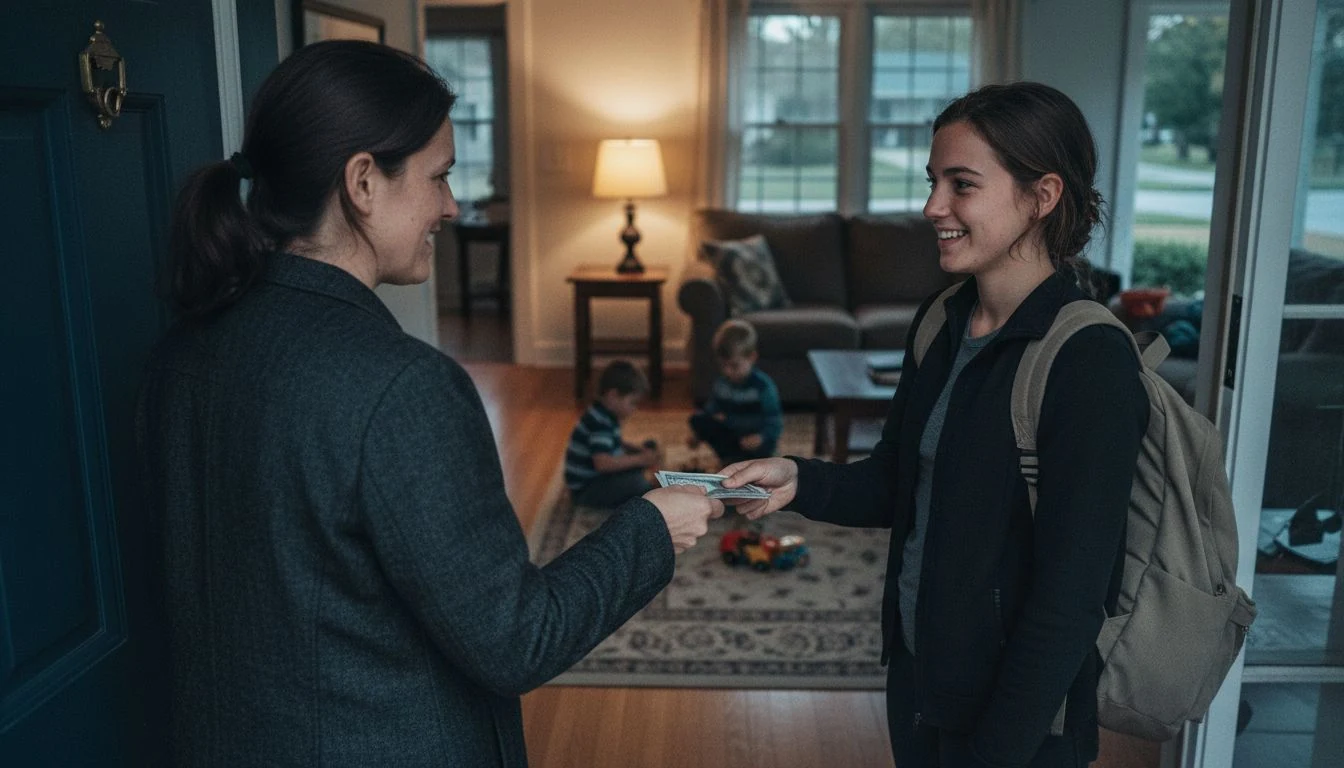
The average babysitting rate in the U.S. is about $20.70 an hour to start, according to rates sitters reported on Care.com, updated in October 2026. More experienced sitters averaged up to about $28.45 an hour.
I babysat all through college for $10 an hour and thought I was rich. Now my sister pays more than double that for her Saturday date nights, and she texts me every few months asking “is this normal?” So this one is for her, and for you if you’ve wondered the same: what sitters charge right now, what changes the rate, and how to fit a sitter into the family budget without date night turning into a $120 surprise.
The average babysitting rate right now
Babysitting is informal, so there’s no single official rate. The best national snapshot I’ve found comes from Care.com, where sitters list their own prices. Its babysitter cost data, last updated in October 2026, shows:
- Average starting rate: about $20.70 an hour nationwide.
- Average top rate: about $28.45 an hour for sitters with more experience.
- Average weekly babysitting cost: $175, in Care.com’s 2026 cost of care report, which assumed about 8 hours a week.
That last number is $175 for 8 hours, so roughly $21.90 an hour. It lines up with the starting rate, which makes me trust both a bit more.
For context, the U.S. Bureau of Labor Statistics puts the median pay for childcare workers at $16.82 an hour in 2025. Those are mostly workers at daycares and preschools. Private sitters often charge more per hour because the work is short, irregular and at night.
For a lot of parents, the sitter line in the budget is what keeps a marriage, a job or a little sanity intact.
What changes the average babysitting rate
When my sister was quoted $16 one week and $27 the next, the difference came down to a few things:
- Where you live. City and suburb rates are often several dollars higher than small towns. On Care.com’s New York pages, the average starting rate was about $26.57 in Hampton Bays and $19.17 in Garnerville.
- Number of kids. Many sitters add $2 to $5 an hour per extra child. Two kids under five is a lot more work than one 9-year-old.
- Age of the kids. Infants usually cost more. Bottles, diapers and naps mean more responsibility.
- The sitter’s age and training. A 15-year-old neighbor usually charges less than a college student with CPR certification.
- Timing. Late nights, last-minute calls and holidays often come with a higher rate. New Year’s Eve is famously pricey.
- Extra duties. Cooking dinner, driving, homework help or light cleaning can reasonably raise the price.
My sister has two boys, ages 4 and 7. Her regular sitter, a nursing student, charges $22 an hour. When she booked a teen from down the street for a quick dinner, it was $15.
Before she trusted anyone with a full Saturday night, she did a paid trial. The sitter came for two hours on a Sunday afternoon while my sister was home, folding laundry in the next room. She paid the full rate for it, $44, and watched how the sitter handled snack time and the inevitable fight over the tablet. It was the best $44 she spent that year, because she skipped one sitter who looked great on paper and spent the whole trial on her phone.
If you’re hiring for the first time, a short paid trial is worth building into your budget. It costs a lot less than finding out the hard way on a night you needed to be out.
How to figure out a fair rate in your area
National averages are a starting point. My sister and I worked out a fair rate for her neighborhood this way:
- Check local listings. Look at what sitters in your ZIP code post on a couple of sitting sites. Note the range, not just the lowest.
- Ask two or three parents nearby. School pickup and neighborhood groups are full of people who’ve already done this math.
- Adjust for your kids. Add a couple dollars per extra child, or for a baby, if your listings don’t already.
- Decide on extras up front. Will the sitter drive? Cook? Agree on those before the first night, not at 11 p.m.
- Round to an easy number. $20 or $22 is easier for everyone than $19.75, and it avoids the awkward hunt for change.
The biggest lesson: pay what keeps a good sitter coming back. My sister lost a great sitter once over $2 an hour, then spent three months finding someone the kids liked as much.
Tips, gas money and the extras nobody mentions
The hourly rate is only part of what a night out costs. These add up quietly:
- Rounding up. Most parents round up to the next hour or the next $5. A 3.5-hour night at $22 is $77, and many people hand over $80.
- Getting home late. If you’re running late, pay for the extra time and say thank you. It matters more than you think.
- Rides. If a teen sitter can’t drive, someone has to take them home. Budget the time or a rideshare.
- Food. Leaving pizza money or dinner for the sitter is common for evening jobs.
- Holiday bonuses. Regular sitters often get an extra night’s pay, or a gift card, in December.
Cozy tip: Give babysitting its own line in your budget instead of letting it hide inside “fun money.” Pick a monthly number, like two date nights at $80, and set that cash aside on payday. The free printable budget template has a blank category line that works perfectly for this.
What a babysitter costs over a month: a worked example
The cost adds up faster than you’d think once it becomes a habit. These are example numbers built around Care.com’s national averages, so swap in your local rate.
| Schedule in this example | Hours per month | At $16/hour (teen sitter) | At $21/hour (near average) | At $28/hour (experienced sitter) |
|---|---|---|---|---|
| One date night a month (4 hours) | 4 | $64 | $84 | $112 |
| Two date nights a month | 8 | $128 | $168 | $224 |
| Weekly after-school help (2 hours, 4 weeks) | 8 | $128 | $168 | $224 |
| Two date nights plus weekly after-school help | 16 | $256 | $336 | $448 |
The jump from a teen to an experienced sitter on the busiest schedule is almost $200 a month. That doesn’t mean you should always go cheapest. For a baby or a long night, the more experienced sitter can be worth every dollar.
Babysitter, nanny or daycare: which one fits your budget?
A babysitter works best for occasional or part-time care. Once you need care most weekdays, the math shifts.
- Babysitter: paid by the hour, flexible, no long-term commitment. Great for evenings and gaps.
- Nanny: a regular, often full-time employee. Care.com’s 2026 report put the average weekly nanny cost at $870, and there can be tax obligations. My guide to the average nanny salary breaks that down.
- Daycare: usually the cheapest for full-time care per child. My post on daycare cost walks through what families pay.
One tax note: if you pay any one household worker $3,000 or more in cash wages in 2026, the IRS says you may owe Social Security and Medicare taxes for them. Occasional sitters usually don’t reach that, and wages paid to sitters under 18 often don’t count unless babysitting is their main job. IRS Publication 926 has the details.
How to budget for a sitter when money is tight
When my sister’s family had a lean year, date nights were the first thing to go. They came back, but cheaper. These are the ideas that worked for her and for other parents I know:
- Swap with another family. She trades Saturday nights with a neighbor: one couple watches all the kids, then they switch the next month. The cost is pizza.
- Join or start a babysitting co-op. A group of families trades hours instead of money. It takes a little organizing, but nobody pays cash.
- Book a shorter window. A 2.5-hour dinner instead of a 4-hour night out cuts the bill by more than a third at the same rate.
- Go out after bedtime. Once the kids are asleep, the job is easier, and a younger sitter may be a good fit.
- Use daytime dates. A weekend lunch while the kids are with grandparents costs nothing in sitting.
What I wouldn’t cut is paying fairly. If money is tight, book less often instead of paying less per hour. A sitter who feels respected shows up, stays off her phone and says yes when you call at the last minute.
Common mistakes with the average babysitting rate
- Treating the national average as your local price. Rates can differ by several dollars an hour between nearby towns, so check your own area.
- Forgetting the extras. Rounding up, rides home and dinner can add $10 to $20 to a single night.
- Not agreeing on duties first. Driving, cooking or bath time for three kids are fair reasons for a higher rate, so settle them before the first booking.
If you’re working babysitting into a bigger plan, my guide to making a family budget is a good next step. For more numbers on what families spend, see my budgeting statistics page, or browse the saving money section.
Frequently Asked Questions
How much should I pay a babysitter per hour?
Care.com’s October 2026 data puts the national average starting rate at about $20.70 an hour and the top average at about $28.45. Adjust for your area, how many kids you have and their ages.
How much do you pay a babysitter for 2 kids?
Many sitters add $2 to $5 an hour for each extra child. If the one-child rate is $20, two kids might run $22 to $25 an hour, especially if one is a baby.
How much does a teenage babysitter charge?
Teen sitters usually charge less than adults, often in the mid-teens per hour depending on the area. Rates go up with experience, CPR training and the number of kids.
Do you tip a babysitter?
Tipping isn’t required, but many parents round up to the next hour or the next $5, pay extra when they come home late, and give a bonus around the holidays to regular sitters.
Do I have to pay taxes for my babysitter?
Usually not for occasional sitting. The IRS says household employer taxes apply if you pay one worker $3,000 or more in cash wages in 2026, and wages to workers under 18 often don’t count. See IRS Publication 926.
Grab my free Monthly Budget Template
The same cozy spreadsheet I use to track every dollar — sinking funds, bills, and savings, all in one place. Join the newsletter and I’ll send it straight to your inbox.
No spam, ever. Unsubscribe anytime. — Nora
Keep reading — more on Saving Money