
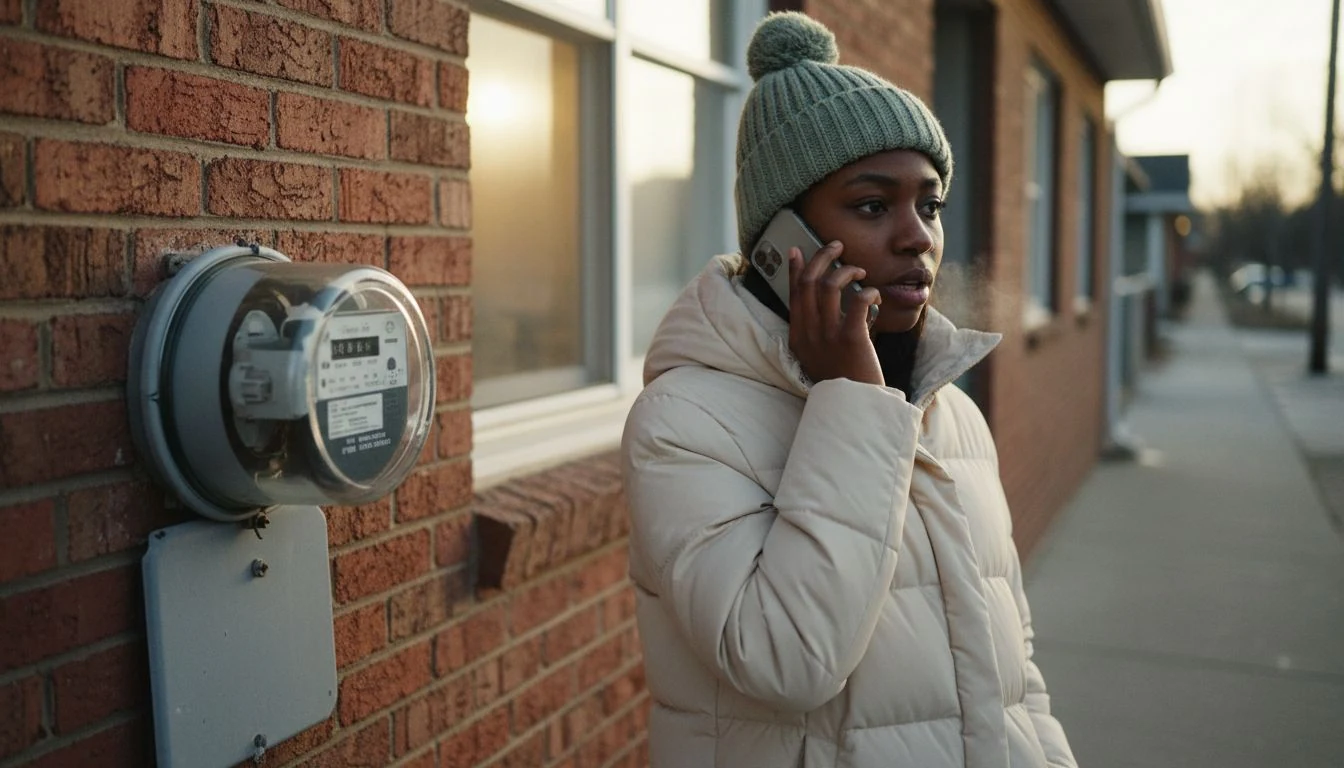
Help paying electric bill balances exists in more places than most of us ever check, and the first place to try is the phone number printed on the bill itself.
I learned that the slow way. The winter my gas bill hit $312, the electric bill landed the same week at $118, and I did what I always did back then: paid the smaller one, let the bigger one sit, and felt sick about both. I never called anyone. I assumed help was for people in worse shape than me, and that asking would be embarrassing.
Neither was true. So this is the list I wish I’d had that winter: where to get help paying electric bill costs, in the order I’d call now, what to say on the phone, and how to keep next month from turning into the same mess. It’s my experience plus a lot of reading, not financial advice.
Help paying electric bill costs starts with your utility, not a charity
Your power company has more tools than its customer service menu lets on. Most of them never get offered unless you ask by name, because the default script is “pay the balance or we’ll send a notice.”
Here’s what utilities commonly have, depending on your state and provider:
- Payment arrangements. The past-due amount gets split over a few months on top of your normal bill. This is the most common yes.
- Budget billing. They average your year so January and July cost about the same. It doesn’t shrink what you owe, but it kills the surprise months.
- Hardship or customer assistance funds. Many utilities run a small fund (often fed by customer donations) that pays a one-time chunk of a bill.
- Income-based discount rates. Some states require utilities to offer a lower rate to qualifying households. You have to enroll; it isn’t automatic.
- Due date changes. Moving the due date a week past payday sounds tiny. For me it was the difference between paying on time and paying late.
When I finally called about my own bill a year later, I asked about one thing: budget billing. The rep enrolled me in four minutes. My bill went to a flat $121 a month and I stopped dreading the mail.
Where to get help paying electric bill debt, in the order I’d call
If you’re behind right now, go down this list in order. Each step is faster than the one after it.
- Your utility’s billing line. Ask for a payment arrangement, then ask, “Do you have a hardship fund or a low-income rate I could apply for?”
- Your local LIHEAP office. The federal Low Income Home Energy Assistance Program pays part of heating and cooling bills, and in many states it also has crisis money for shutoff notices. I wrote a whole guide to how the home energy assistance program works and who qualifies, because I ruled myself out once and was wrong.
- The National Energy Assistance Referral line, 1-866-674-6327. It doesn’t give money. It tells you where your local office is, which is half the battle when you don’t know who runs the program in your county.
- 211. Call or text 211 and ask about utility help. They know which local churches, Salvation Army branches and community action agencies have money this month, and that list changes constantly.
- Your community action agency. These are the local nonprofits that often run LIHEAP and weatherization, and they sometimes have their own emergency funds on top of it.
One timing note. LIHEAP is funded by Congress every year, and this year’s money arrived in pieces. In October, federal officials released about $3.6 billion to states, roughly 90% of the stopgap level, while the full-year budget was still being argued over. Translation: apply early. Several states close their program the day the money runs out.
The rep on the other end of that call has heard “I’m behind” a hundred times before lunch.
What to say when you call the power company
I used to freeze on these calls. Having a script helps, so here’s the one I’d use.
“Hi, I’m calling about account number ___. I’m behind by $___ and I want to set up a plan before it becomes a shutoff. Can you tell me what payment arrangements you offer? And do you have a hardship fund, a low-income rate, or budget billing?”
Then stop talking and let them answer. Write down three things: the rep’s name, the date, and the exact terms they agree to. If they offer a plan, ask what happens if you miss one payment. Some plans cancel completely after a single miss, which is worth knowing before you agree to a number you can’t hold.
Be honest about what you can pay. A plan of $40 a month that you make beats a $90 promise that falls apart in February. I’d rather say a small number with a straight face than a big one I’ll have to take back in March.
Shutoff protections most people don’t know about
Many states limit when a utility can disconnect you, especially in winter. The rules are set state by state, so I can’t hand you one national date, but they usually fall into a few buckets:
- Date-based winter rules. No residential disconnections between certain months for some or all households.
- Temperature-based rules. No shutoffs when the forecast drops below a set temperature.
- Medical certificates. A note from a doctor or clinic can pause a shutoff for a set period if someone in the home has a serious health need. In Pennsylvania, for example, a certificate holds a shutoff off for 30 days and can be renewed.
- Notice requirements. Utilities generally have to warn you in writing before cutting service, which gives you a window to call.
Search “[your state] public utility commission disconnection rules” and read the official page. It takes five minutes. A moratorium doesn’t erase the debt, though. The balance keeps waiting for you in spring, so use the breathing room to set up a plan, not to ignore the bill.
Free fixes that lower the bill you’re trying to pay
Assistance covers the past. Next month’s bill is already on its way. The cheapest way to stay caught up is to make each month smaller.
The federal Weatherization Assistance Program, run through the U.S. Department of Energy, does free insulation, sealing and repairs for low-income households. The department says homes save an average of $372 or more a year. I didn’t know it existed until a friend got her drafty rental sealed and her winter bills dropped.
On my own, the thermostat did the most. Setting the air to 78 when I’m out and 74 an hour before I’m home moved my summer number more than any lightbulb ever did. I put everything that worked in my list of ways to save on your electric bill, including the gadget I wasted $40 on. And if you want to know whether your bill is high or just feels high, compare it to the average electric bill for your state first.
Cozy tip: Once you’re caught up, give electricity its own line in your budget at your highest month, not your average one. Whatever’s left over in mild months rolls into a little utility cushion. Our free monthly budget printable has a utilities row ready for exactly this.
A $480 past-due example, worked out
Numbers make this less scary. Here’s a made-up but realistic case. Say you’re $480 behind and your normal bill is about $130.
| Option | What it does to the $480 | Your monthly bill after | Catch |
|---|---|---|---|
| Do nothing | Grows with late fees | $130 + past due + fees | Shutoff notice, reconnection fee |
| 4-month payment plan | $120/month toward it | About $250 for 4 months | Miss one and the plan can cancel |
| Hardship fund grant of $200 | Drops to $280 | About $200 on a 4-month plan | One-time; funds run out |
| LIHEAP crisis benefit (if approved) | Could cover part or all | Back to about $130 | Paperwork, wait time, varies by state |
| Budget billing (after catching up) | Doesn’t touch the debt | Flat yearly average | A “settle-up” month at year end |
The point of the table is stacking. A grant plus a plan is often the move: the grant shrinks the balance, and the plan spreads what’s left.
Three mistakes that make an electric bill worse
- Waiting for the shutoff notice. Utilities and agencies have more options before a disconnect than after one, and reconnection fees add to the hole.
- Paying a stranger who calls about your bill. Scammers pose as utilities and demand payment by gift card or app “within the hour.” Hang up and call the number printed on your bill.
- Agreeing to a plan you can’t keep. One missed payment can void it. Pick the number you can hit in your worst month.
How to stop needing help paying electric bill balances next winter
Getting caught up is the first win. Not falling behind again is the bigger one, and it’s mostly about one boring habit.
I keep a small utility sinking fund now. Every month I set aside $25 on top of my budget-billing amount, and it sits there for the surprise settle-up bill or a cold snap. It took about a year to feel like a real cushion. That’s normal. You can see how common it is to have almost nothing set aside in our roundup of budgeting statistics, which made me feel less alone.
If utilities in general are squeezing you, the same call-first approach works for water too. I wrote up where to get help paying a water bill after the federal water program ended. And there’s more in our saving money section if you want to keep going.
If you do one thing this week, make the call to your utility while the balance is still small. I waited a full winter to make mine, and the four minutes it took still annoy me.
Frequently Asked Questions
Who can help me pay my electric bill right now?
Start with your utility’s billing department and ask about payment arrangements, hardship funds and low-income rates. Then contact your local LIHEAP office (call 1-866-674-6327 to find it) and dial 211 for local charities and community action agencies that have money this month.
Can I get help with my electric bill if I have a job?
Yes. Most programs look at household income and size, not whether you work. Plenty of working households qualify for LIHEAP or utility hardship funds, so check the actual income limit instead of guessing.
Can the power company shut off my electricity in winter?
It depends on your state. Many states restrict winter disconnections by date or temperature, and medical certificates can pause a shutoff. Check your state public utility commission’s rules, and remember the balance is still owed afterward.
How fast can I get emergency help with an electric bill?
A payment arrangement with your utility can happen on the same call. Hardship funds and LIHEAP crisis benefits take longer, from a few days to a few weeks, so apply as soon as you see a past-due balance rather than waiting for a shutoff notice.
Does LIHEAP pay electric bills or only heating?
LIHEAP can help with heating and cooling costs, and in many states that includes the electric bill when electricity heats or cools your home. Each state sets its own rules, so ask your local office what your benefit can be applied to.
Grab my free Monthly Budget Template
The same cozy spreadsheet I use to track every dollar — sinking funds, bills, and savings, all in one place. Join the newsletter and I’ll send it straight to your inbox.
No spam, ever. Unsubscribe anytime. — Nora
Keep reading — more on Saving Money