
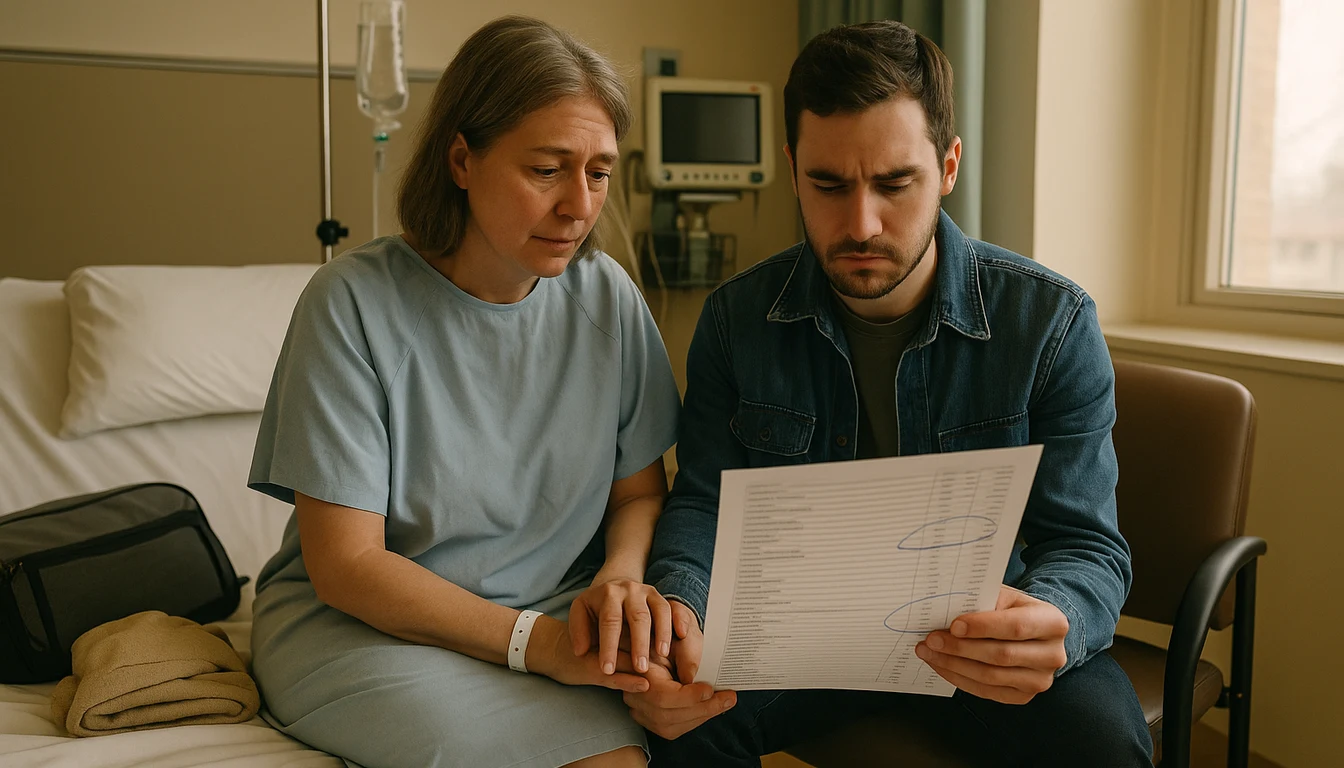
A hospital bill is a first offer, and you can negotiate medical bills without being a lawyer or someone who enjoys phone calls. Most of the work is paperwork. Boring, fixable paperwork.
I’ve never had a five-figure hospital bill. My medical money story is smaller and a little embarrassing: during my debt payoff I had no room left for a dentist visit, so I put it on the same card I was trying to kill and paid interest on a cleaning for months. What I do have is a lot of practice calling companies and asking for a lower number. Everything below is built on rules hospitals are required to follow, with the official sources linked so you can check me.
Why you can negotiate medical bills at all
Hospitals keep a master price list, usually called the chargemaster, and almost no one pays it. Insurance companies negotiate their own rates off that list. So the number on a self-pay bill is often the highest price the hospital charges anyone for that service.
Since January 1, 2021, federal rules have required hospitals to post their prices online, as one giant machine-readable file plus a consumer-friendly list of shoppable services. If you can see roughly what a hospital accepts from insurers for the same procedure, you have a number to point at on the phone.
The Consumer Financial Protection Bureau’s guide on what to do if you can’t pay a medical bill lists negotiating the bill down to an amount you can afford as a normal option. That’s the federal consumer watchdog telling you to ask.
First, don’t pay it yet (and keep it off your credit card)
When a $3,000 envelope lands, you want to do something about it today. The most useful thing to do in week one is nothing with your money. You have more time than it feels like.
- Nonprofit hospitals have to wait. Under IRS rules, they can’t start extraordinary collection actions for at least 120 days after the first bill they send you after discharge. That covers selling your debt, reporting you to credit bureaus, suing, and garnishing wages, and they owe you 30 days of written notice before any of it.
- Check which kind of hospital it is. For-profit hospitals aren’t bound by those IRS rules. The hospital’s website usually says, and you want to know before your first call.
- Your credit has some cushion. The three big credit bureaus don’t list medical collections under $500, remove them once they’re paid, and wait a year before a medical debt can show up. A federal rule that would have gone further was struck down in court in July 2025, so those bureau policies are what’s left.
Then there’s the card. The CFPB warns against rushing to pay a hospital with a credit card or a medical credit card, and I learned why the dumb way with that dentist visit. A card turns a bill you could have negotiated into debt with interest. Once the hospital has its money, there’s nothing left to talk about.
Step one: get the itemized bill and read it line by line
The first statement usually says something like “Emergency services: $3,412.” That tells you nothing. You want the itemized bill, which lists every charge with its billing code and date. You have to ask for it.
- Call the billing number on the statement and ask for a fully itemized bill with the billing codes.
- If you have insurance, download the Explanation of Benefits (EOB) for that visit from your insurer’s site or app.
- Line the two up by date. Each charge on the bill should match a line on the EOB.
- Circle anything off: the same line twice, medication you never took, a canceled test, a full room day charged for the day you went home.
- Search any code you don’t recognize. The code number alone usually tells you what it’s for.
- Write your question next to each circled line, so the call runs off a list instead of your memory.
If you’re insured, the first question is whether the claim went through insurance correctly. A claim denied over a coding mistake gets fixed by resubmitting it, with no haggling at all. Errors are the easiest money on the whole bill, because a charge that shouldn’t be there comes off completely.
Step two: ask for financial assistance before you ask for a discount
This is the biggest lever, and most people skip it. Every nonprofit hospital must have a written financial assistance policy, often called charity care, covering emergency and other medically necessary care. It has to spell out who qualifies, whether the help is free or discounted care, and how to apply. A plain-language summary has to be on the hospital’s website, on paper if you ask, and displayed in the emergency room and admissions areas.
The budget part: if you qualify, the hospital can’t charge you more for emergency or medically necessary care than it generally bills people who have insurance. And the application window is long, generally 240 days from that first post-discharge bill.
Please don’t decide you won’t qualify before you read the policy. Each hospital sets its own income limits, and having insurance doesn’t rule you out; the CFPB notes these programs can help underinsured patients too. I made this exact mistake with home energy assistance. I decided by gut feeling that I earned too much, and by the time I read the real rules, the window had closed. Get the application, and have last year’s tax return or a recent pay stub ready.
Charity care sounds like it’s for someone else. Read the income limits before you believe that.
How to negotiate medical bills on the phone
Call the hospital’s patient financial services or billing office, not your doctor’s office. Block 30 minutes, keep the itemized bill and your circled questions in front of you, and know your number before you dial. Your number is what your budget can pay, as one lump sum or a monthly amount. It is not whatever the rep suggests first.
- Get the rep’s first name and a reference number for the call.
- Say you’re reviewing the itemized bill and have questions about specific lines, then go down your list.
- Ask whether your account has been screened for financial assistance, and ask them to send the application.
- If you’re paying yourself, ask about a self-pay or prompt-pay discount, and what they accept from insurers for these codes.
- Offer only what you can pay. If it’s a lump sum, say the dollar figure out loud and stop talking.
- Ask them to hold the account from collections while the review or application is open.
- Get any agreement in writing before you pay a cent.
The call has the same shape as the one in my average phone bill post: polite and specific, with room for a little silence. If the first person says no, ask who can approve it, or thank them and call back another day.
When it’s time to talk money, this is the sentence I’d use, word for word: “I’m not refusing to pay. I’m asking what the lowest amount is that settles this account, and whether you can put that in writing.”
Turn what’s left into a payment plan your budget can carry
After corrections and any assistance, there may still be a balance. The CFPB suggests asking about an interest-free repayment plan, and many hospitals run those in-house. The monthly amount should come from your budget.
Take an example. Say the balance after fixes is $1,800 and the billing office suggests $300 a month. If your budget has about $90 of slack, offer $75 a month for 24 months. That still pays the full $1,800, and it’s a payment you’ll keep making in a tight month.
Be careful if the office hands you a brochure for a medical credit card. Some use deferred interest: if the balance isn’t gone when the promo ends, interest can be charged back to the original purchase date. A zero-interest plan from the hospital almost always wins.
Once it’s set, it goes in the budget as a fixed bill, same as the utilities. If you’re juggling other balances, my guide to paying off debt on a low income covers the order, and the rest of my debt payoff posts are there when you want them. After it’s paid off, keep the $75 moving into a medical line in your sinking funds so the next copay has somewhere to land.
If you were uninsured, or the bill was a surprise
The No Surprises Act, in effect since January 2022, adds two protections.
If you don’t have insurance or choose not to use it, providers generally have to give you a good faith estimate of the cost, at least three business days ahead when care is scheduled. Keep that estimate. If the final bill comes in at least $400 higher, you may be able to dispute the bill through a federal process. The initial bill has to be dated within the last 120 calendar days, and filing costs a $25 non-refundable fee.
If you do have insurance, you’re protected from most surprise out-of-network bills for emergency care, for out-of-network providers who treat you at an in-network hospital, and for air ambulance rides. The federal No Surprises help desk is at 1-800-985-3059. And if you’re choosing a plan this fall, look at the deductible next to the premium; I ran the numbers in what health insurance really costs per month.
Which lever to pull when you negotiate medical bills
Most people try one thing: calling and asking for a discount. It’s usually the weakest lever on the table. This is how I’d match the bill in front of you to the tool that fits, with the deadline that matters for each.
| Your situation | Pull this lever first | What to ask for | Clock to watch |
|---|---|---|---|
| Any bill from a nonprofit hospital | Financial assistance policy | The application and the plain-language summary | Generally 240 days from the first post-discharge bill |
| Insured, but the bill looks wrong | Itemized bill vs. your EOB | Removal of errors, or resubmission to insurance | Before any payment; your plan sets appeal deadlines |
| Uninsured, scheduled care | Good faith estimate dispute | Federal dispute if the bill is $400+ over the estimate | Bill dated within 120 calendar days; $25 fee |
| Insured, surprise out-of-network ER bill | No Surprises Act protections | In-network cost sharing only | Call the help desk as soon as it arrives |
| Correct bill, too big to pay at once | Self-pay discount, then a plan | Lump-sum settlement or an interest-free monthly plan | Nonprofit hospitals: no collections for at least 120 days |
| Already sent to collections | Written validation, then a written settlement | Proof of the debt, then the settled amount on paper | Pay nothing until the terms are written down |
Common mistakes when you negotiate medical bills
- Paying the first statement in full. That summary bill hasn’t been checked for errors or screened for assistance, and paying it gives up both.
- Agreeing to anything only by phone. A rep’s promise disappears when the account changes hands. No written agreement, no payment.
- Self-disqualifying from charity care. Income limits are set hospital by hospital and often run higher than people assume. Read the policy first.
Cozy tip: Before you call, write your one number on a sticky note (the lump sum or monthly payment your budget can carry) and keep it in sight during the call. Then grab my free printable budget template and give that payment its own line. Surprise bills are the ones that knock budgets over, which is part of why I keep my page of budgeting statistics updated.
If you do one thing this week, make it the call for the itemized bill and the financial assistance application. Ten minutes, two requests, and you’ll know which lever you’re working with.
Frequently Asked Questions
Can you really negotiate medical bills?
Yes. The CFPB lists negotiating a bill down to an amount you can afford as a normal option. Start with the itemized bill and the hospital’s financial assistance policy, then ask about a self-pay discount.
How much can a medical bill be reduced?
There’s no standard percentage, and anyone who promises one is guessing. Billing errors can come off entirely, and if you qualify for financial assistance at a nonprofit hospital, your care may be free or discounted. The rest depends on the hospital and what you can pay.
Does negotiating a medical bill hurt your credit?
Asking questions or negotiating doesn’t touch your credit. Damage comes when a debt goes to collections and gets reported. The three big bureaus don’t list medical collections under $500, drop paid medical collections, and wait a year before reporting medical debt.
Can you negotiate medical bills that are in collections?
Yes. Ask the collector to validate the debt in writing first, then negotiate, and get any settlement amount on paper before you pay. If the bill came from a nonprofit hospital, also ask the hospital directly about its financial assistance policy.
Should I use a credit card to pay a hospital bill?
Usually not as your first move. The CFPB cautions that credit cards and medical credit cards can carry high interest, and paying in full ends your chance to negotiate. Ask the hospital for an interest-free payment plan first.
Grab my free Monthly Budget Template
The same cozy spreadsheet I use to track every dollar — sinking funds, bills, and savings, all in one place. Join the newsletter and I’ll send it straight to your inbox.
No spam, ever. Unsubscribe anytime. — Nora
Keep reading — more on Debt Payoff